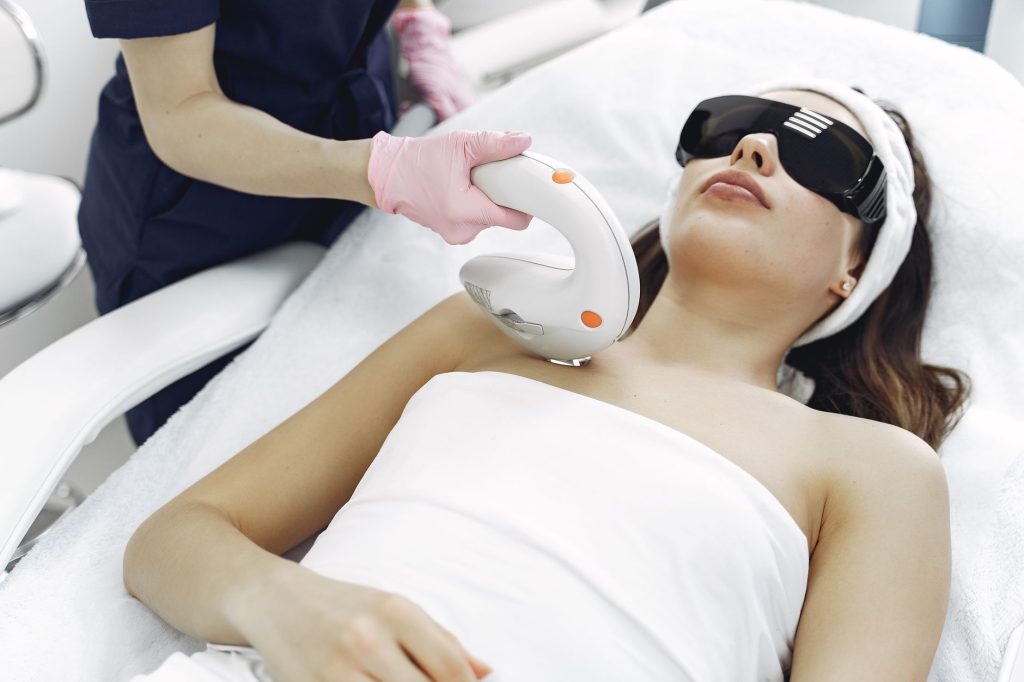
Some redness after a light-based hair removal session is expected, and manufacturers say so in their own documentation. The useful distinction is not whether skin reacts, but what kind of reaction it is, how long it lasts, and whether it appeared where the light was applied or somewhere else entirely.
- Device
- IPL handset or laser hair removal device
- Time
- 10 minutes
- Tools
- None
- Difficulty
- No disassembly
Why skin reddens at all
These devices work by delivering light that is absorbed by melanin in the hair and converted to heat at the follicle. Skin around the follicle is heated too. Mild, short-lived redness and a faint warmth are the visible result of that heat, and manufacturers typically describe them as normal and expected within a defined window.
The problem is that skin contains melanin as well. The darker the skin, the more energy is absorbed where it is not wanted — which is why the American Academy of Dermatology is direct that light-based hair removal performed improperly can cause burns, permanent changes in skin colour, and scarring.
Expected, and settling
- Mild redness in the treated area Confined to where the device was applied, appearing within minutes, fading over hours. Manufacturers generally give a window in the manual for their specific device.
- A warm or mildly stinging feeling Comparable to mild sunburn, easing steadily rather than building.
- Small raised bumps around follicles Sometimes described as follicular oedema, settling within a day or so.
- Hairs appearing to grow in the following days Not regrowth. Treated hairs are shed, and they work their way out of the follicle first, which looks like growth to anyone watching closely.
Not expected — stop and get advice
Any of the following means stop using the device and speak to a clinician rather than adjusting the setting and continuing:
Blistering, weeping or broken skin. Pain that increases rather than settles. Redness spreading beyond the treated area. Skin that becomes noticeably lighter or darker than the surrounding skin and stays that way. Redness still present after the window the manufacturer describes. Any reaction after a session that was uneventful at the same setting before.
The three things that most often cause a bad reaction
A tan. Recent sun exposure raises melanin in the skin, which raises absorption where you do not want it. This applies to self-tan as well: the device’s sensor reads the colour it sees, and a sunless tan is still a layer of colour between the window and your skin.
Photosensitising medication. A number of common medicines make skin dramatically more reactive to light. This is a conversation to have with a pharmacist or doctor before a first session, not after a reaction.
An intensity level chosen by feel. Manufacturers publish level guidance against skin tone and body area for their own device. A level that was comfortable on a calf is not automatically appropriate on a face or bikini line, where skin is thinner.
Before the next session
Let the skin return fully to normal before treating again, follow the interval in your manual rather than a shorter one, and keep treated areas out of the sun — skin that has just been through a session is more sensitive, not less. If you are unsure whether a device is appropriate for your skin at all, the AAD’s guidance is worth reading before your next session rather than after it.
Sources
- Laser hair removal: overview — American Academy of Dermatology
- Dermatologists debunk common misconceptions about laser hair removal — American Academy of Dermatology
- Medical lasers — U.S. Food and Drug Administration